Digital Nomad Life Is Changing and That Might Be a Good Thing
For years, the digital nomad lifestyle was presented through a fairly predictable image: a laptop on a café table, a tropical view in the background and the freedom to move somewhere new whenever you felt like it. Bali for a month, Lisbon for the next, perhaps Mexico City after that. The appeal was obvious, especially for anyone who had spent years commuting to an office and wondering why work needed to happen in the same building every day.
That image helped turn digital nomadism from a relatively niche lifestyle into something people around the world began seriously considering. Remote work made it possible for more people to imagine spending part of the year abroad without taking a traditional career break. At the same time, coworking spaces, coliving houses, online communities and services designed specifically for remote workers made the logistics easier than they had been for earlier generations of long term travellers.
But as the lifestyle has become more established, the conversation around it has started to change. The question is no longer simply whether working while travelling is possible. We already know that it is. The more interesting question is whether constantly moving is actually the best way to do it.
More remote workers are discovering that changing countries every few weeks is not always as effortless as it looks online. Finding another apartment, learning another neighbourhood, figuring out transportation, searching for somewhere productive to work and rebuilding a social circle in every destination takes time. When you are also trying to meet deadlines or manage clients across several time zones, the freedom of constant movement can eventually begin to feel like another form of pressure.
That does not mean the digital nomad lifestyle is disappearing. If anything, it suggests that it is becoming more mature. Instead of asking how many countries they can visit in a year, more people are beginning to ask what it would actually take to build a good temporary life somewhere. That change sounds small, but it could reshape what digital nomadism looks like over the next few years.
Slow Travel Is Starting to Make More Sense
One of the most noticeable changes within the digital nomad world is the growing appeal of staying somewhere for longer. The traditional version of nomad life encouraged movement. You spent a few weeks somewhere, experienced as much as possible and then moved on to the next destination. For someone travelling purely for leisure, that can be exciting. When you are working at the same time, however, the experience can be very different.
Every move comes with a surprisingly long list of small tasks. You need somewhere to live, reliable internet, transportation, groceries, a place to work and some understanding of the neighbourhood around you. You might need a local SIM card or eSIM, a gym, somewhere to take calls and a basic understanding of how everyday life works in the city. None of those things is particularly difficult on its own, but repeating the process every few weeks creates friction.
Staying somewhere for two or three months changes the rhythm completely. The first week can still be about discovering the city, but you no longer feel pressure to experience everything immediately. There is time to return to places you like, explore neighbourhoods outside the obvious tourist areas and allow routines to develop naturally. If you are curious about what that looks like in practice, our one month in Málaga slow travel guide takes this approach to a longer stay rather than treating the city as a short weekend destination.
After a few weeks, you know which café is comfortable enough to work from and which one only looks good in photographs. You know when the supermarket is quiet, how the public transport system works and where you actually enjoy spending your weekends. You might join a gym or coworking space and begin recognising the same people. Invitations start arriving without you having to actively search for another event every evening.
There is also a financial advantage. Monthly accommodation is often more practical than booking a series of short stays, while constantly changing destinations means repeatedly paying for flights, trains, airport transfers and all the small costs that come with arriving somewhere new. Slow travel does not automatically make digital nomadism cheap, but it can make spending more predictable.
Perhaps more importantly, staying longer gives people a chance to discover whether they genuinely enjoy living somewhere rather than simply enjoying a holiday there. A city can be fantastic for four days and frustrating after two months. The opposite can also be true. Some places become much more interesting once you stop trying to see everything and start developing an ordinary life.
The Financial Reality Is Becoming Harder to Ignore
Money has always been closely connected to the digital nomad lifestyle. One of its original attractions was geographic flexibility: earn income from one market while living somewhere where everyday expenses are lower. For freelancers and remote employees earning salaries from higher income countries, that could create a lifestyle that felt both adventurous and financially attractive.
The calculation is not always as simple today. Popular destinations attract more visitors, short term accommodation can become expensive and services specifically marketed towards digital nomads often carry a premium. A stylish coliving space with coworking facilities, community dinners and organised activities might solve several problems at once, but it can also consume a significant part of someone's monthly budget. Coliving can still be useful, particularly when community is a priority, but it is worth looking beyond the room itself and asking what you are actually getting from the experience. We explore that idea further in our article about coliving, community and opportunities.
There are also expenses that are easy to underestimate before leaving. Travel insurance, flights, deposits, coworking memberships, mobile data, transportation, visa costs and the occasional emergency all add up. Someone who planned their budget around inexpensive accommodation and food can quickly discover that moving itself is one of the most expensive parts of the lifestyle.
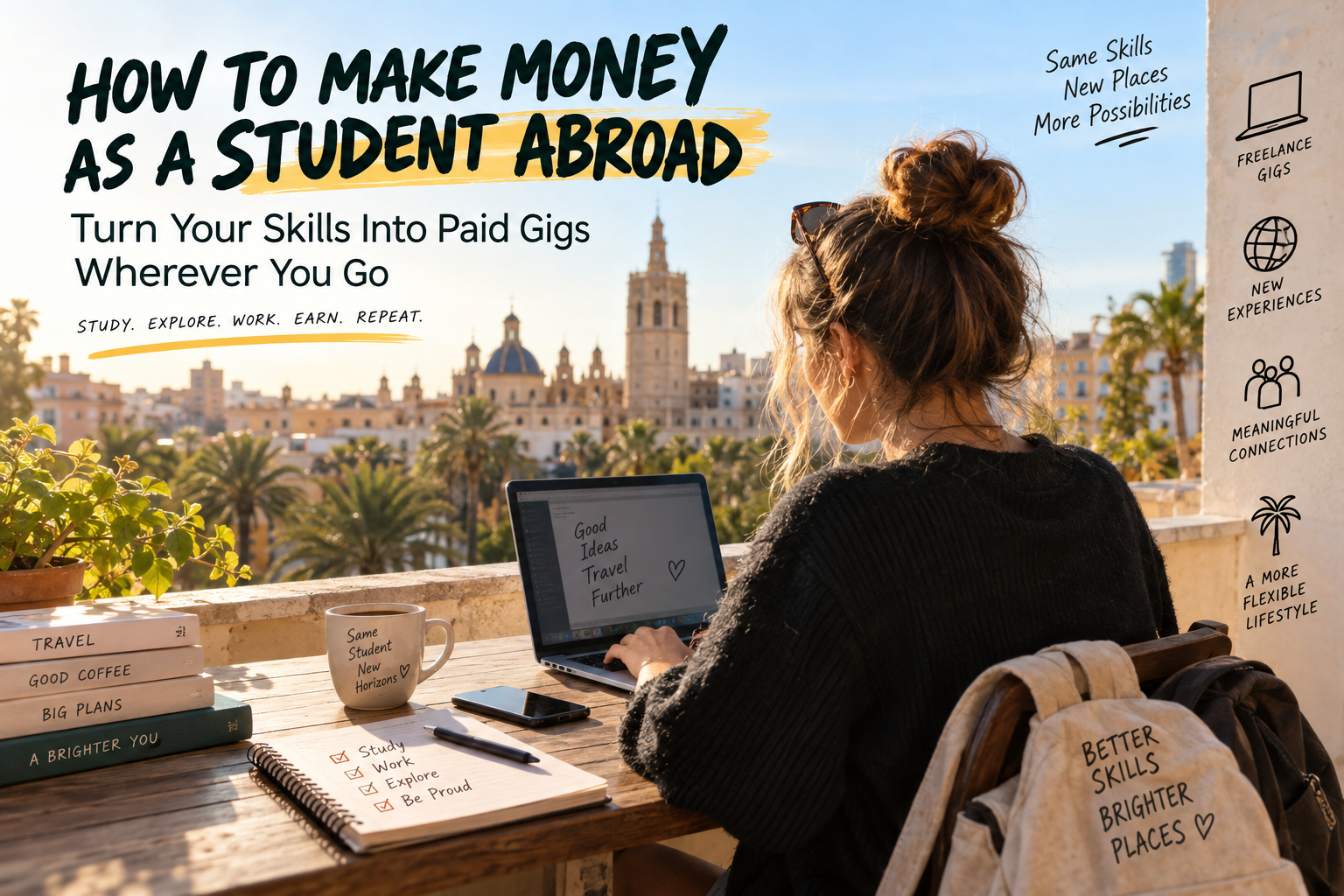
This matters because not everyone interested in becoming a digital nomad is a software engineer earning a large remote salary. There are freelancers building their client base, creatives with irregular income, people taking a career break, recent graduates experimenting with remote work and professionals trying to transition away from traditional employment. Students and younger travellers face many of the same questions, particularly around how to support a longer stay without turning it into another full time job. Our guide to making money as a student abroad looks at some of those options in more detail.
For this group, the question is not necessarily how to find another full time job abroad. In many cases, that would defeat the flexibility they were looking for in the first place. The more interesting opportunity is finding ways to supplement existing income without committing to a traditional job.
Small Gigs Can Make a Big Difference
A flexible gig does not need to replace someone's income to be valuable. If a traveller is staying somewhere for two months, earning a few hundred euros through a short project might cover a coworking membership, part of their accommodation or several weeks of everyday expenses. More importantly, the commitment can remain small enough that they still have the freedom to explore the destination.
The types of opportunities can vary enormously depending on someone's skills. A photographer might create images for a hostel or restaurant. A designer could help a small business improve its menu or website. Someone with social media experience might produce a month of content for a local brand. A developer could fix a website problem, while a writer might help with English language copy or blog content.
Other opportunities do not necessarily need to involve local businesses. Travellers could discover remote freelance projects posted by founders, small companies or other members of the community. Someone planning to spend time in Spain, for example, could browse current paid gigs before leaving and see whether anything fits their destination, skills and travel dates.
This is where the distinction between a job and a gig becomes important. Most people exploring this lifestyle are probably not looking to move abroad so they can recreate the structure of a traditional nine to five. What can be attractive is optional work that fits around the life they are trying to build.
There is also a psychological difference between arriving somewhere hoping that opportunities appear and arriving knowing that there are already things you could potentially work on. For someone who is still figuring out whether the digital nomad lifestyle is financially realistic, that visibility can reduce some of the uncertainty before making the move. Travellers considering Spain can also look through our guide to short term paid jobs in Spain to understand the kinds of details worth checking before planning a stay around an opportunity.
The Pre Arrival Experience Is Still Surprisingly Empty
Planning the practical side of travel has become incredibly easy. Within an evening, you can compare flights, reserve accommodation, research neighbourhoods, check coworking spaces and read hundreds of reviews from people who have already visited your destination. What remains much harder is understanding what your actual life will look like after you arrive.
You can find lists of restaurants and attractions, but it is more difficult to know who you might meet, what projects are happening locally or whether there are interesting opportunities that match your skills. Those things usually become visible only after arriving and joining local WhatsApp groups, attending meetups, talking to people at coworking spaces and slowly becoming part of the local network.
That creates a strange gap in the digital nomad experience. We can organise almost every logistical detail before leaving home, yet many of the things that determine whether we enjoy living somewhere remain hidden until we get there.
For someone travelling with a comfortable salary, that uncertainty might be part of the adventure. For someone testing the lifestyle with savings or inconsistent freelance income, it can be a much bigger barrier. Knowing that there are potential projects, gigs or communities waiting at the destination could make the decision to go significantly easier.
This is particularly relevant for people who are curious about digital nomadism but do not yet identify as digital nomads. They may be able to work remotely for a few months, have some savings or be considering freelancing, but they are not necessarily ready to sell everything and travel indefinitely. Giving that person more visibility before they arrive could make the lifestyle feel far more accessible.
Community Matters More When You Stay Longer
Meeting people while travelling has never been particularly difficult in popular nomad destinations. There are coworking events, language exchanges, networking evenings, running clubs, dinners, WhatsApp communities and organised weekend trips. In cities with established international communities, someone can arrive alone and have a social calendar within days.
The harder part is turning those introductions into meaningful relationships. When people are constantly arriving and leaving, social life can become repetitive. You meet someone interesting, spend a few evenings together and discover that they are flying somewhere else the following week. Then another group arrives and the process begins again.
This is one reason slow travel and community are closely connected. Relationships need repetition. Seeing the same people at a coworking space, working on a project together or meeting regularly for an activity creates a completely different experience from attending one large networking event after another.
It also changes what community can mean. Instead of community being treated as a separate product that people consume through events, it can develop around shared activity. Two people collaborating on a project have an obvious reason to speak to each other. Someone helping a local business meets people they would probably never encounter at a digital nomad meetup. A designer who needs a photographer can connect with another traveller whose skills complement their own.
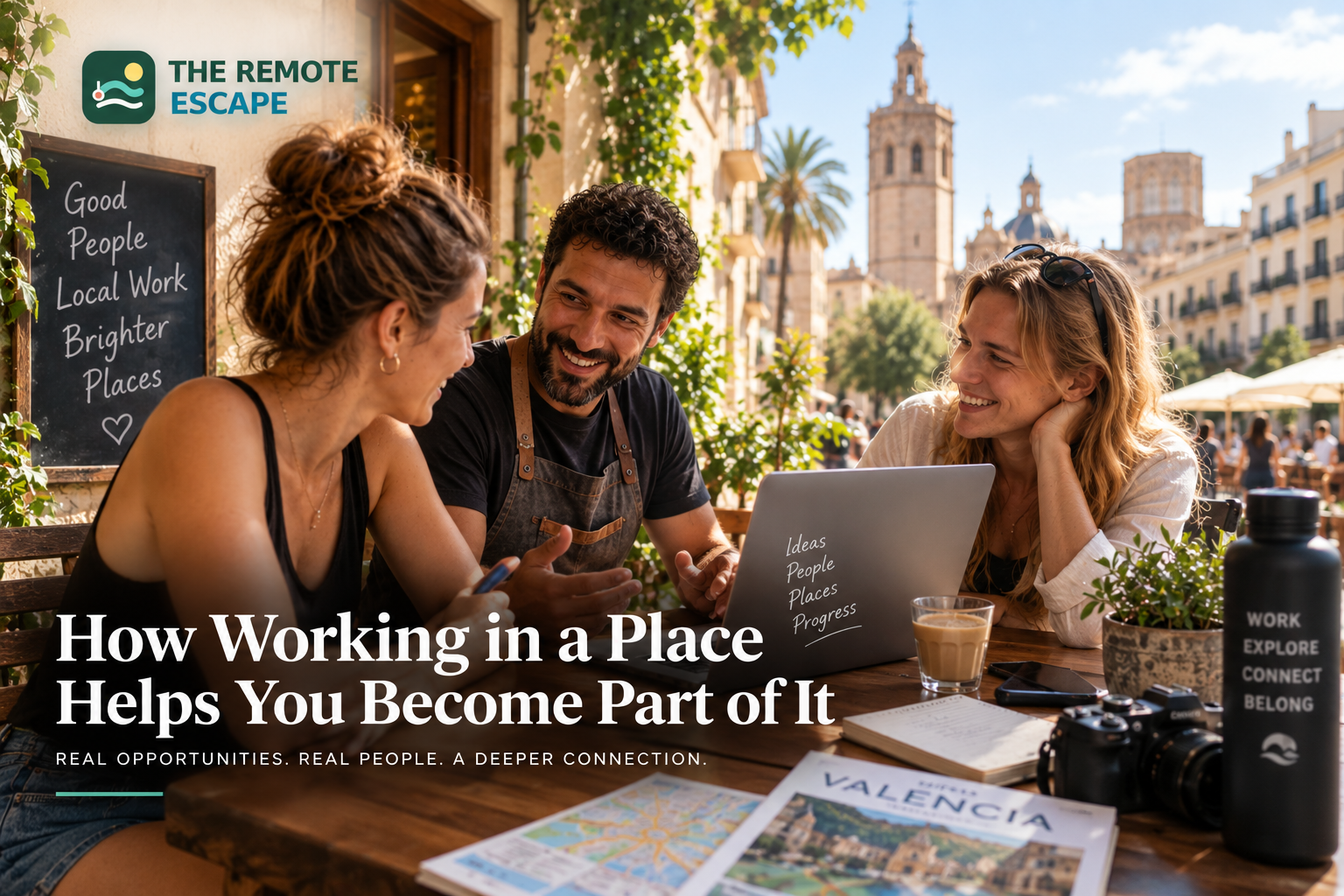
Those interactions are often more natural because networking becomes the result rather than the objective. People are not meeting simply to exchange LinkedIn profiles. They are doing something together, and relationships develop around that. We explored this idea in more depth in How Working in a Place Helps You Become Part of It, particularly how shared projects and everyday interactions can change someone's relationship with a destination.
There Is a Difference Between a Nomad Community and a Nomad Bubble
As digital nomad destinations grow, there is also an uncomfortable question the community needs to confront. It is entirely possible to spend months in another country while interacting almost exclusively with other international travellers.
You can live in a coliving house with foreigners, work from a coworking space full of foreigners, attend international meetups and spend your weekends at places recommended by the same community. It can be enjoyable and convenient, but eventually the destination risks becoming little more than a backdrop.
This matters because the growth of remote work has created real tensions in some popular destinations. Local residents may see rising housing costs and neighbourhoods increasingly designed around temporary visitors, while travellers can remain largely disconnected from the consequences of those changes.
No individual traveller can solve those problems, and it would be unrealistic to pretend otherwise. However, people can make choices about how they participate in a destination. Learning some of the language, supporting independent businesses, respecting local customs and making an effort to meet residents rather than only other nomads are relatively simple ways of creating a more balanced experience.
Work and skills can also become part of that relationship. A photographer helping a guesthouse, a marketer supporting an independent business or someone contributing their expertise to a local initiative has a different connection with a place than someone who simply consumes it. Paid work should still be paid fairly and local regulations matter, but the broader idea is valuable: travel becomes more interesting when participation replaces observation.
The Best Nomad Destination Might Not Be the Cheapest One
For a long time, destination rankings focused heavily on affordability, internet speed, weather and nightlife. Those things still matter, but longer stays create a different set of priorities. Someone spending three months in a city may care more about walkability, public transportation, access to nature, community, housing quality and whether everyday life feels comfortable.
The cheapest destination can become expensive if you constantly feel the need to leave it. A slightly more expensive city might offer better transportation, stronger communities and more opportunities to work or collaborate, making the overall experience more sustainable.
There is also no universal best destination because people want very different things from this lifestyle. One person wants beaches and nightlife, another wants mountains and quiet mornings, while someone else cares almost entirely about professional connections and startup communities. The important question is not which destination is ranked number one. It is which place fits the kind of temporary life you are trying to create.
Season also changes that calculation. A destination that feels overcrowded or expensive in summer can offer a very different experience several months later. If Spain is on your list, our guide to the best places in Spain for digital nomads in winter compares several possible longer stay destinations, while the Canary Islands winter guide goes deeper into planning a longer stay there.
That is another reason pre arrival information could become more valuable. Instead of choosing a city purely because it appears on a list of popular digital nomad destinations, travellers could eventually choose based on the communities, opportunities and projects that are actually available there.
Seasonal Work Can Fit Naturally Into Longer Travel
There is another part of flexible travel that does not receive as much attention as traditional remote work: seasonality. Tourism destinations do not need the same number of people throughout the year. Restaurants, hospitality businesses, events and other local companies can experience periods when they need additional help for a few weeks or months rather than permanently.
For travellers, that can create an interesting overlap between where they want to spend time and where businesses temporarily need people. Someone planning several months in Spain might not want a permanent role, but a clearly defined opportunity during part of their stay could make sense. The important part is understanding the dates, responsibilities, compensation and expectations before building travel plans around it.
If this type of work is part of your plans, our guides to seasonal jobs in Spain and summer jobs in Spain explain some of the patterns worth considering. Travellers who do not speak much Spanish can also explore our guide to jobs in Spain for English speakers, while still checking the actual language requirements of each individual opportunity.
Digital Nomadism Is Becoming Less About Escape
The word freedom appears constantly in conversations about remote work, but freedom can mean different things at different stages of the lifestyle. At first, freedom might mean being able to leave your home city and work from somewhere warm. Later, it might mean not having to move simply because your accommodation ends next week or because everyone else is travelling somewhere new.
There is nothing wrong with moving quickly if that is what someone enjoys. Some people genuinely thrive on constant change. The point is that digital nomadism no longer needs to follow a single template. You can travel continuously, spend half the year abroad, stay three months in one place or simply work remotely from another country occasionally.
That flexibility makes the lifestyle accessible to a much wider group of people. Someone does not need to become a permanent traveller to benefit from location independence. They might spend a winter somewhere warmer, work from another European city for two months or use the gap between jobs to experiment with living abroad.
In many ways, that may be where the largest opportunity exists. The future of digital nomadism may include far more people who do not actually call themselves digital nomads. They are simply people with enough flexibility to spend meaningful periods of time somewhere else.
What People Need After Booking the Flight
The infrastructure around travel is already excellent at helping people get somewhere. We have platforms for flights, accommodation, insurance, transportation, coworking spaces and activities. The part that still feels fragmented is everything that helps someone build a life after they arrive.
Where are the interesting projects? Which businesses need temporary help? Who else is arriving at the same time? Are there founders looking for designers, photographers looking for collaborators or local companies that need help for a few weeks? Most of this information exists somewhere, but it is scattered across social media, private groups, community chats and personal networks.
Bringing some of that information forward could change the arrival experience completely. Imagine knowing before travelling that there are several flexible gigs matching your skills, a community event during your first week and people working on projects you find interesting. You would still be arriving somewhere unfamiliar, but you would not necessarily be starting from zero.
This is the idea behind The Remote Escape. The goal is not to create another platform telling people which city they should visit. There are already plenty of places to find that information. The more interesting challenge is helping people answer the question that comes afterwards: what can I actually do when I get there?
Paid gigs are a central part of that because money matters, particularly for people who are still building remote income. But gigs can also become a doorway into everything else. A project introduces you to a business. A business introduces you to people. Those people introduce you to a community, and suddenly the city begins to feel less anonymous. If you are considering this approach, you can see how finding and applying for a gig works before deciding whether an opportunity fits your plans.
The Future Could Be More Local, Even for People Who Keep Moving
There is an interesting contradiction at the heart of digital nomadism. Technology has made work less dependent on location, yet many of the experiences that make travel meaningful are intensely local. The neighbourhood you live in, the people you meet, the businesses you discover and the routines you develop are what eventually separate living somewhere from simply passing through it.
The next version of the digital nomad lifestyle may therefore be less obsessed with being location independent and more interested in what becomes possible once you choose a location, even temporarily. Remote work gives you the ability to go almost anywhere. The more interesting question is what you do once you are there.
For some people, that will mean staying longer. For others, it will mean becoming more involved in local communities or finding flexible ways to earn while travelling. Some will use the lifestyle to experiment with potential future homes, while others will continue moving but do so more slowly and deliberately.
None of this makes the original digital nomad dream less exciting. It simply makes it more realistic. Freedom does not have to mean moving constantly, and travelling does not have to mean living permanently outside ordinary life. Sometimes the best part of arriving somewhere new is eventually reaching the point where it stops feeling completely new.
A More Sustainable Version of the Digital Nomad Life
Digital nomadism is growing up. The first phase proved that millions of people could work without being tied to a traditional office. The next phase may be about figuring out how to use that flexibility without turning life into an endless sequence of airports, apartment searches and introductions.
That might mean spending three months somewhere instead of three weeks. It might mean choosing destinations based on community rather than Instagram photographs, or looking for occasional paid projects that make a longer stay financially comfortable. It might mean meeting local residents alongside other travellers and finding ways to contribute skills rather than simply consuming another destination.
Most importantly, it could mean giving people more information before they leave. Knowing where you will sleep is useful, but knowing what opportunities might be waiting for you can change how confident you feel about going in the first place.
That is particularly important for the people sitting somewhere between traditional employment and full time nomadism. They have some savings, some flexibility and perhaps a few freelance clients, but they are still deciding whether living abroad can work for them. They do not necessarily need another inspirational photograph of someone working beside a swimming pool. They need practical ways to make the numbers work, meet people and create some stability once they arrive.
If the next generation of digital nomad platforms can help with those problems, the lifestyle could become accessible to far more people. Not because everyone will suddenly want to travel permanently, but because spending a few months living and working somewhere else will feel less like a leap into the unknown.
The future of digital nomadism may therefore be surprisingly ordinary. You arrive somewhere, find a place you like to work, meet a few people, contribute to a project, earn some money, develop your favourite routines and eventually start feeling at home. Then, when you are ready, you decide what comes next.
Maybe that is a flight to another country. Maybe it is another three months in the same apartment. Either way, the point is no longer how quickly you can move. It is how much of a life you can build while you are there.