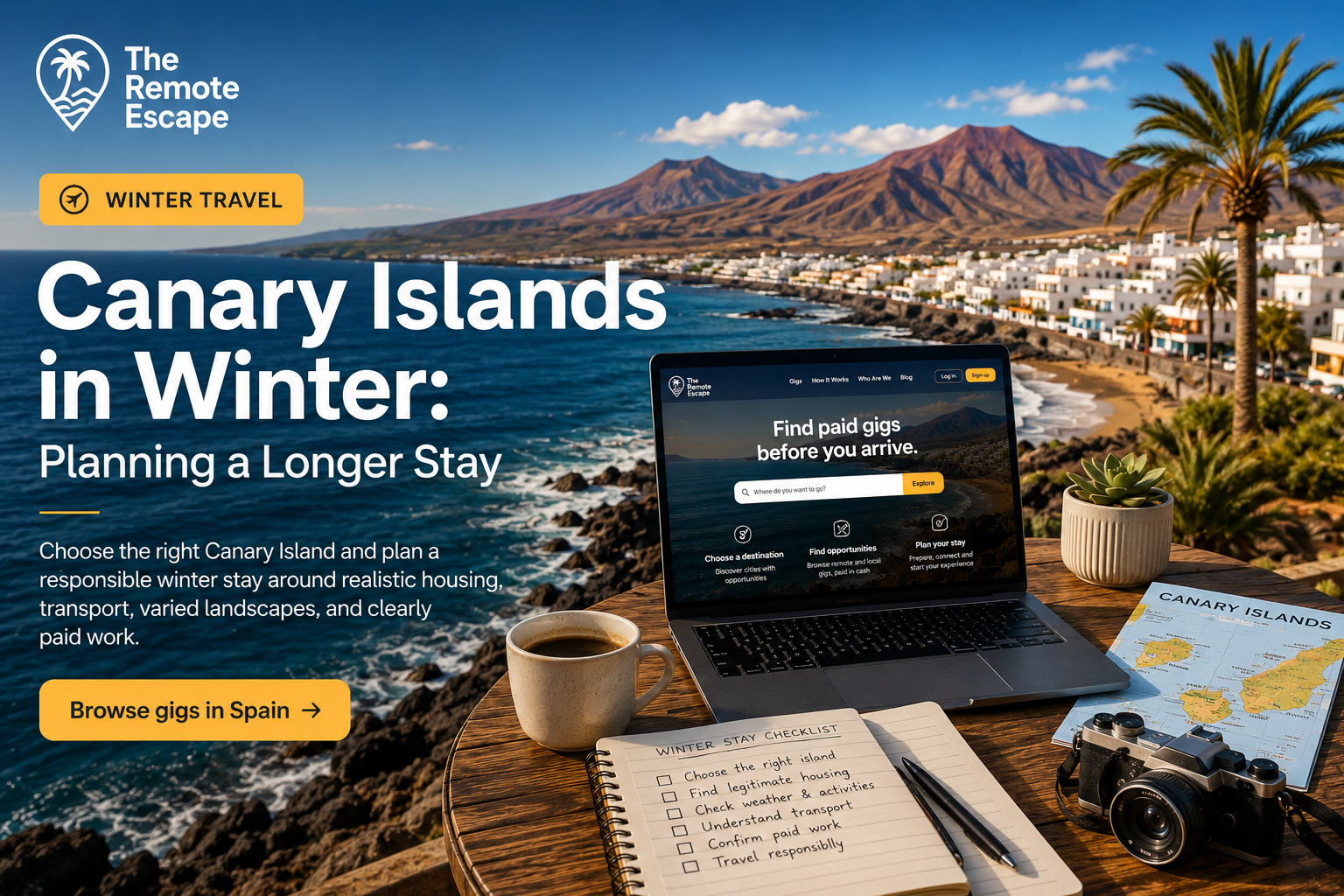
The Canary Islands in winter can offer a change of climate and a distinctive island routine, but they are not one interchangeable destination. Tenerife, Gran Canaria, Lanzarote, Fuerteventura, La Palma, La Gomera, El Hierro, and La Graciosa differ in scale, landscape, transport, and the kind of stay they support.
A good longer stay begins by choosing an island for everyday life. not simply booking the cheapest flight. Compare housing for exact dates, the location of any paid commitment, local transport, and how much movement between islands you can genuinely afford.
Choose an island before choosing an itinerary
Tenerife and Gran Canaria have major urban centres and broader transport networks alongside beaches and mountain landscapes. Lanzarote and Fuerteventura appeal to many travelers for volcanic scenery, open space, and coastal activities. The western islands can suit quieter nature-focused stays, but connections and car dependence require closer planning.
Research municipalities rather than judging an entire island by a resort description. North and south, coast and elevation can produce different conditions. Check the official forecast close to travel and pack for the actual activities you plan.
Understand winter demand and housing
Winter is attractive to many visitors, so mild-weather expectations do not guarantee cheap or abundant accommodation. Search early, compare the complete price, and verify deposits, utilities, cancellation terms, and the identity of the accommodation provider.
Do not accept vague housing tied to a job. The Remote Escape is designed around paid gigs and independent accommodation. Keep an emergency reserve and a departure plan that do not depend on the business hosting or paying you immediately.
Build a realistic island routine
Use the first week to learn nearby services, transport, and weather patterns. Alternate active days with ordinary local days rather than crossing the island constantly. If you visit protected landscapes, use official access guidance and reserve permits where required.
Ocean conditions can be powerful even when the weather looks calm. Follow flags, closures, lifeguards, and local emergency guidance. For hiking, account for elevation, rapidly changing conditions, daylight, and the route back.
Transport changes the plan
Each island has its own bus network and geography. A route that looks short on a map may involve transfers or infrequent service. Test the commute to an on-site gig before choosing housing and check the last return connection.
Inter-island flights and ferries make broader travel possible, but they add time, cost, and weather sensitivity. A one-island stay often produces a richer experience than repeatedly packing and transferring.
Finding clearly paid work
Tourism, events, content, photography, and international services may create seasonal projects, but availability changes. Review seasonal work guidance and current gig listings. Confirm compensation, hours, supervisor, location, and payment timing in writing.
Spain's immigration and employment rules still apply in the Canary Islands. Your visitor status or ability to work remotely elsewhere may not authorize a local paid project. Check current government guidance for your nationality and circumstances.
Winter stay checklist
- Select one island based on daily needs and transport.
- Price legitimate housing for exact winter dates.
- Check forecasts for coast and elevation separately.
- Follow official ocean, trail, and protected-area advice.
- Confirm the complete paid-work arrangement before booking.
- Keep emergency funds and independent accommodation.
Planning sources: Spain's official Canary Islands guide, Canary Islands official tourism information, and AEMET Canary Islands forecasts. Weather, access, transport, and regulations can change; verify information for your dates.