There is a particular moment every autumn when working remotely starts to feel like a much better deal. The days get shorter, mornings become colder and sitting beside an open window with a coffee is replaced by checking whether the heating is working properly. If your work can travel with you, it is difficult not to start looking south.
Spain is usually somewhere near the top of that search. Partly because of the weather, of course, but spending winter in Spain as a digital nomad is about more than finding somewhere warmer. If you are going away for a month, two months or perhaps the entire winter, you are not choosing a holiday destination anymore. You are choosing somewhere to live for a while.
That changes what matters. A beautiful beach is nice, but so is having somewhere comfortable to work on a Tuesday morning. Sunshine matters, but so do supermarkets, transport, cafés, coworking spaces and people to meet. A place that looks perfect during a four-day holiday can feel very different once you have spent six weeks there.
The good thing about Spain is that there is no single version of a Spanish winter. You can spend January beside the Atlantic in the Canary Islands, live close to the beach in Málaga, settle into everyday city life in Valencia or choose somewhere smaller like Alicante. The right choice depends on what you want your days to look like after the novelty of arriving has worn off.
So instead of simply asking where Spain is warmest in winter, it is worth asking a slightly different question: where would you actually enjoy living and working for a while?
The Canary Islands: When Escaping Winter Really Means Escaping Winter
If weather is the main reason you are coming to Spain, the Canary Islands are difficult to ignore. They sit far off the coast of mainland Spain, much closer geographically to northwest Africa, and winter there feels very different from winter in most European cities.
That does not mean every day is guaranteed to be hot or that every island has exactly the same climate. The islands have their own microclimates, and conditions can change depending on where you stay and how high you are above sea level. But if your idea of a good January involves spending considerably more time outdoors, the Canaries are an obvious place to start looking.
The more interesting question is which island.
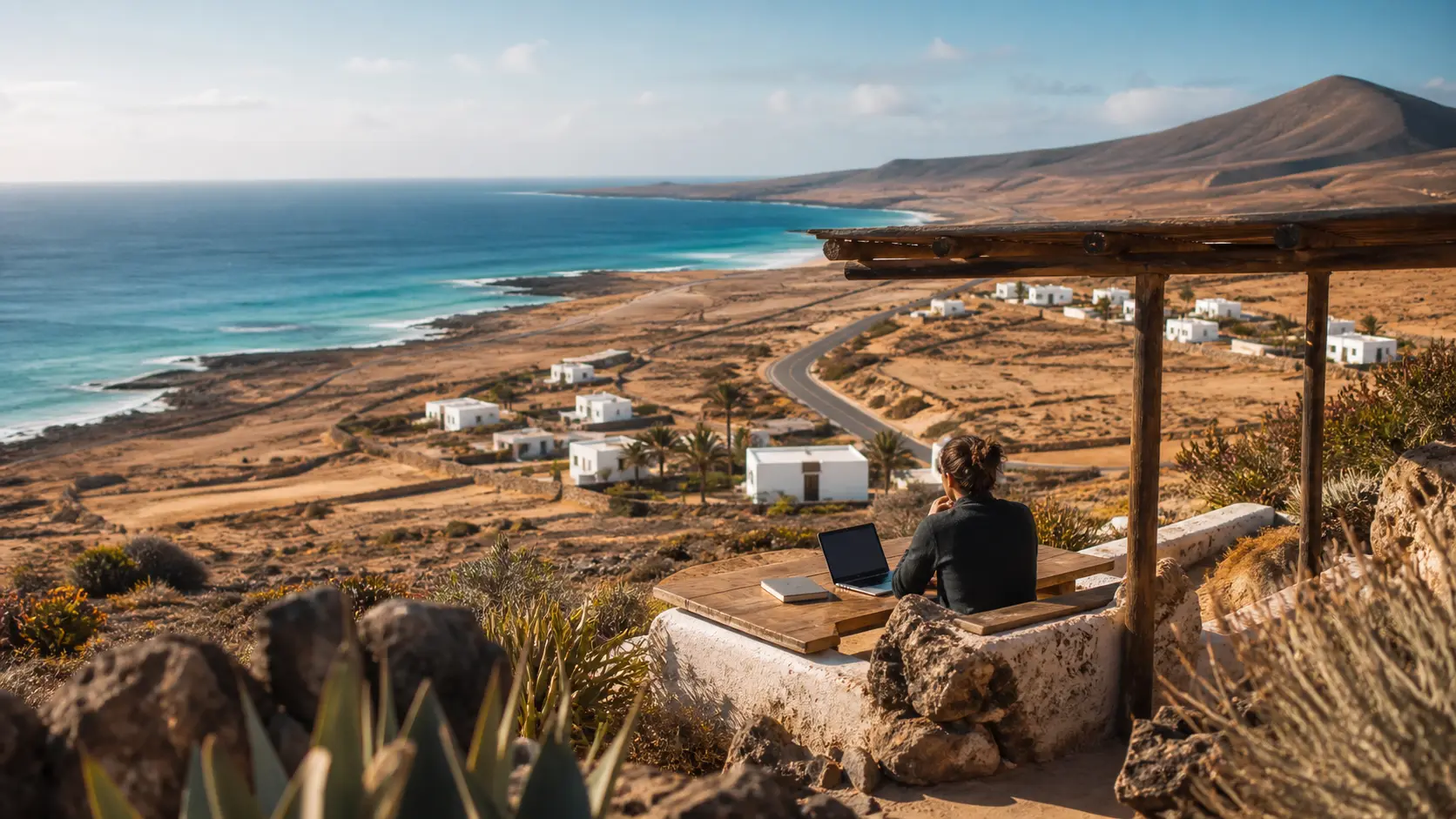
It is easy to talk about the Canary Islands as though they are one destination, but living for two months in Las Palmas is very different from staying in a smaller town on Fuerteventura. One gives you an urban beach, busy neighbourhoods and city infrastructure. Another might give you surfing, open landscapes and a much quieter daily routine.
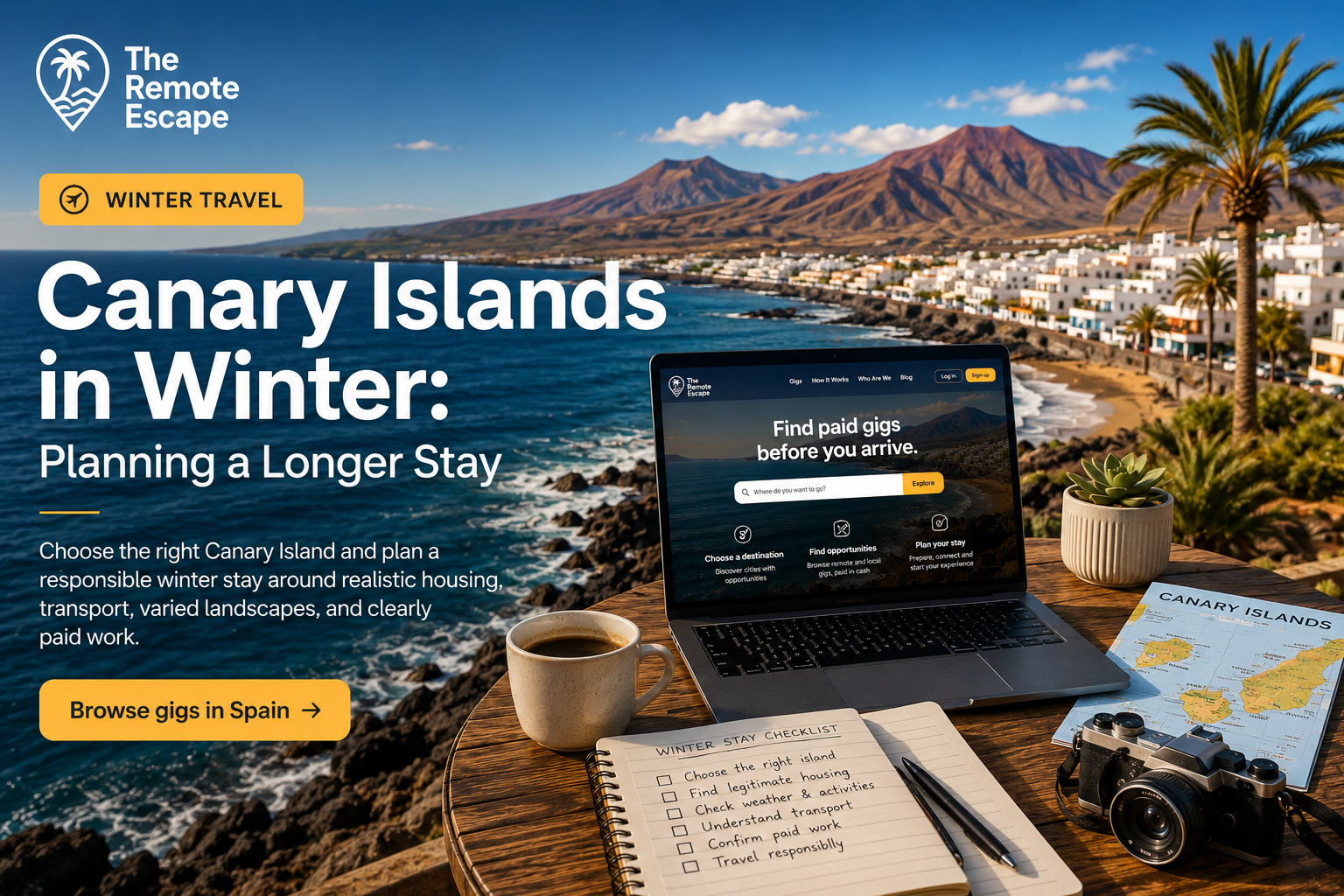
If you are considering a longer winter there, we looked at this in more detail in our Canary Islands in Winter: Planning a Longer Stay guide.
Las Palmas de Gran Canaria: An Island Without Giving Up the City
Las Palmas de Gran Canaria solves a problem that some island destinations create. You can have the ocean and mild winter weather without feeling as though you have moved into a holiday resort for two months.
Las Palmas is a working city. People commute, study, open businesses, meet friends after work and go about ordinary life. That sounds obvious, but it makes a significant difference when you are staying somewhere for longer than a holiday.
Then there is Las Canteras, the long urban beach running alongside part of the city. It changes the rhythm of an ordinary working day. You can spend the morning on your laptop, go outside for lunch and be walking beside the Atlantic a few minutes later. When work finishes, you do not have to organise an excursion to feel as though you are somewhere completely different from northern Europe in January.
There is also an established international and remote-working community, which can make arriving alone easier. Coworking spaces, language exchanges, sports and other social activities give you obvious starting points for meeting people. At the same time, the city is large enough that you do not have to spend your entire stay inside a digital nomad bubble.
That balance is probably Las Palmas' biggest strength. You can build a temporary life there rather than simply arranging a long holiday.
Fuerteventura: Less City, More Space
Fuerteventura offers almost the opposite experience.
If you arrive expecting a dense city full of coworking spaces, nightlife and events every evening, it may not be the right island for you. Fuerteventura makes more sense when you want the things that cities are usually bad at providing: space, beaches, open landscapes, surfing and a slower rhythm.
For some remote workers, that can be exactly what winter needs.
You work in the morning, go outside in the afternoon and gradually develop a routine around a relatively small number of places. There is less pressure to constantly find the next thing to do. Days can become simpler.
Corralejo is one of the more obvious places to consider because it combines restaurants, cafés, beaches, an international crowd and access to surfing and other outdoor activities. But where you stay matters considerably on an island like Fuerteventura. Things are spread out, and your experience will change depending on whether you have a car and how close you are to the places you expect to visit regularly.
The quieter lifestyle is therefore both the attraction and the compromise. Someone who needs constant stimulation may feel restless. Someone who has spent the previous six months rushing between cities might never want to leave.
We wrote more about that side of the island in From Fuerteventura: A New Chapter and New Partnerships.
Tenerife: A Winter Base That Can Feel Like Several Destinations
Tenerife is harder to describe with one image because the island changes so much depending on where you are.
You can move between beaches, volcanic landscapes, forests, towns and mountain roads without leaving the island. For someone who works during the week and wants to explore at weekends, that variety is a major advantage.
It also means choosing your base requires a little more thought. Staying in the north is not the same experience as staying in the south, and choosing a city is different from choosing a smaller coastal town. Even the weather can vary noticeably across the island.
This is where looking at average temperatures for “Tenerife” can become misleading. You are not going to experience an island-wide average while sitting on your balcony. You are going to experience the weather in the particular town and neighbourhood where you booked your apartment.
For digital nomads who enjoy hiking, road trips and being outdoors, Tenerife gives you plenty to do without needing to leave every weekend. If your ideal winter involves closing your laptop on Friday and heading somewhere completely different for two days, it is one of the most interesting options in Spain.
Málaga: Winter in a City That Still Feels Alive
Not everyone wants island life. Islands can be beautiful, but there is something convenient about being able to get on a train, travel somewhere else and remain connected to the rest of the country.
That is where Málaga becomes interesting.
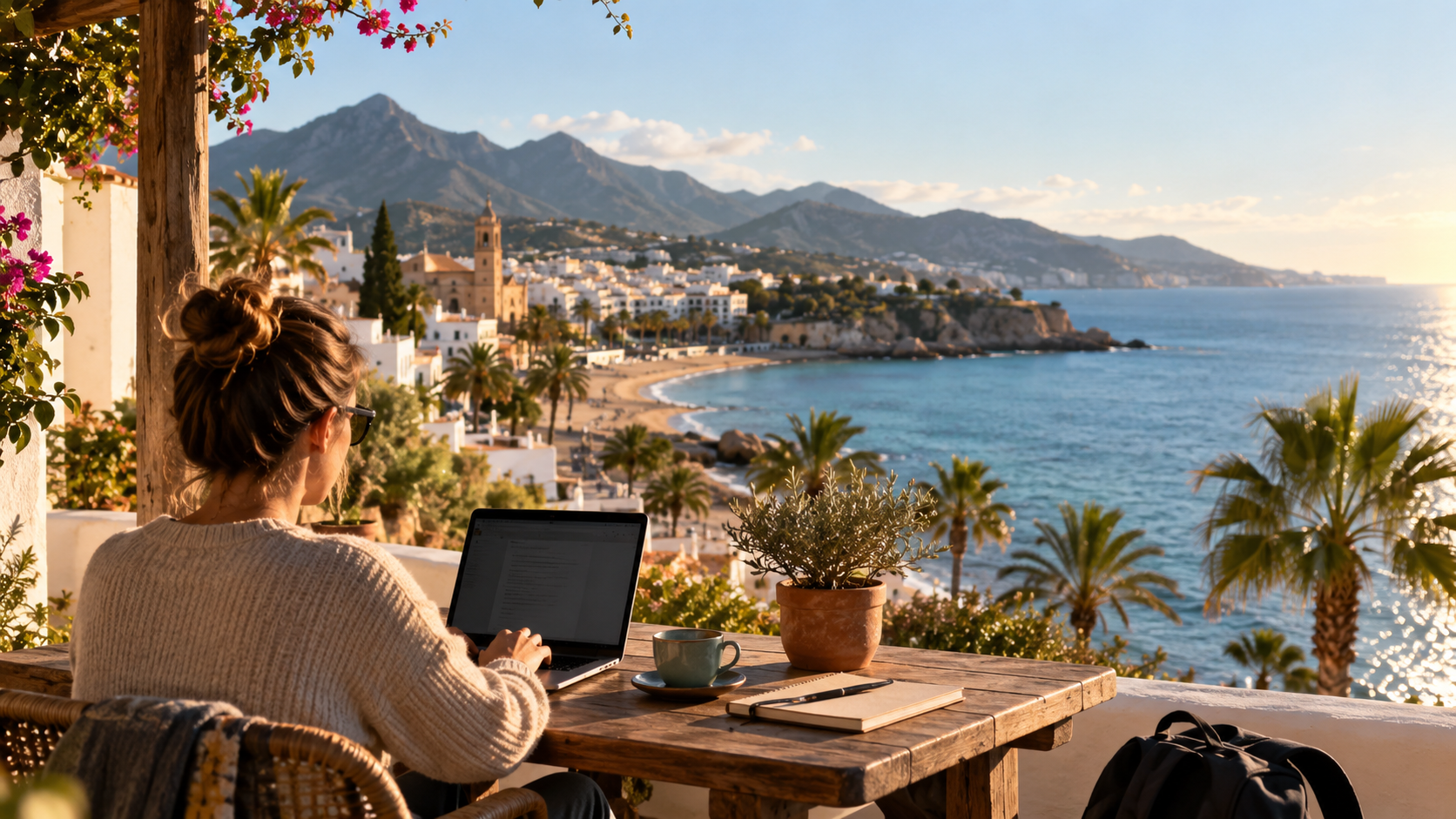
Málaga gives you southern Spain without asking you to give up the advantages of living in a proper city. There are neighbourhoods to explore, restaurants you can return to, museums, beaches, coworking spaces, gyms, supermarkets, cafés and an airport that makes arriving and leaving relatively straightforward.
More importantly, Málaga has enough everyday life to remain interesting after the first week.
That distinction matters. When you are visiting for a weekend, you want enough things to see. When you are staying for two months, you need somewhere you can stop sightseeing.
You want to find the café where you work well, know which supermarket is closest, discover a running route and perhaps start recognising the person who makes your coffee. You want days when nothing particularly exciting happens and you are still happy to be there.
Málaga can provide that. The beach and historic centre might attract you initially, but the city becomes more interesting when you begin finding your own routine beyond them.
If you are considering staying for several weeks rather than visiting briefly, our One Month in Málaga: A Slow Travel Guide for a Longer Stay looks at the city from exactly that perspective.
Valencia: When Liveability Matters More Than Maximum Temperature
Valencia is an interesting winter choi